
No Records Found
Sorry, no records were found. Please adjust your search criteria and try again.
Google Map Not Loaded
Sorry, unable to load Google Maps API.
- Lori
- Cochran
- No
- 801 Matlock Road
Mansfield
Texas
76063
United States - Cook Children's Medical Center - Mansfield Rehab
Mansfield
Texas
76063
United States
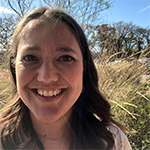
My treatment methodology is centered on the principles of motor learning and those principles are the driving force of all decisions made in therapy, from word selection and activity choice, to cueing strategies and session flow. I am well-trained in DTTC and ReST and I use both, in addition to traditional articulation and phonological techniques, based on what is most impacting the child’s intelligibility at that moment in their development. I utilize simultaneous cueing as a primary strategy and then other multisensory cues which I tailor to each child based on how they respond best. I specialize in severe speech-sound disorders in children under 3 as well as children under 7 who have had limited progress in improving intelligibility with previous therapies. I also work on a cleft palate team and specialize in teasing out hypernasality and nasal air emission which may be associated with VPI and/or CAS.
Parents attend each session and I ask them to actively participate. At first this might mean observing the strategies I'm using, listening to information about the disorder, and learning to identify certain things in their child's speech. Then I work on teaching parents specific strategies, usually starting with simultaneous cueing. Parents get to practice using the strategy in the session so I can coach them on the timing of the cues and how to use them more effectively. We end each session by coming up with a plan for what to work on at home in between sessions. This usually consists of words that the child needs less cueing for, or ones that the parent was able to cue just as successfully as myself.
I believe the decision to utilize AAC is a joint decision between therapist, family, and child, and it can be a great tool to access successful communication while continuing to work on verbal words and/or speech intelligibility. In many cases AAC can be a bridge to talking, though some children may rely more on it throughout life. I am experienced with a variety of AAC devices and features, however my caseload is quite limited in my current role. Therefore if the focus of therapy were to shift toward AAC, I would transition care to another therapist at my clinic with AAC experience.

